
By The Sculpted Consultant
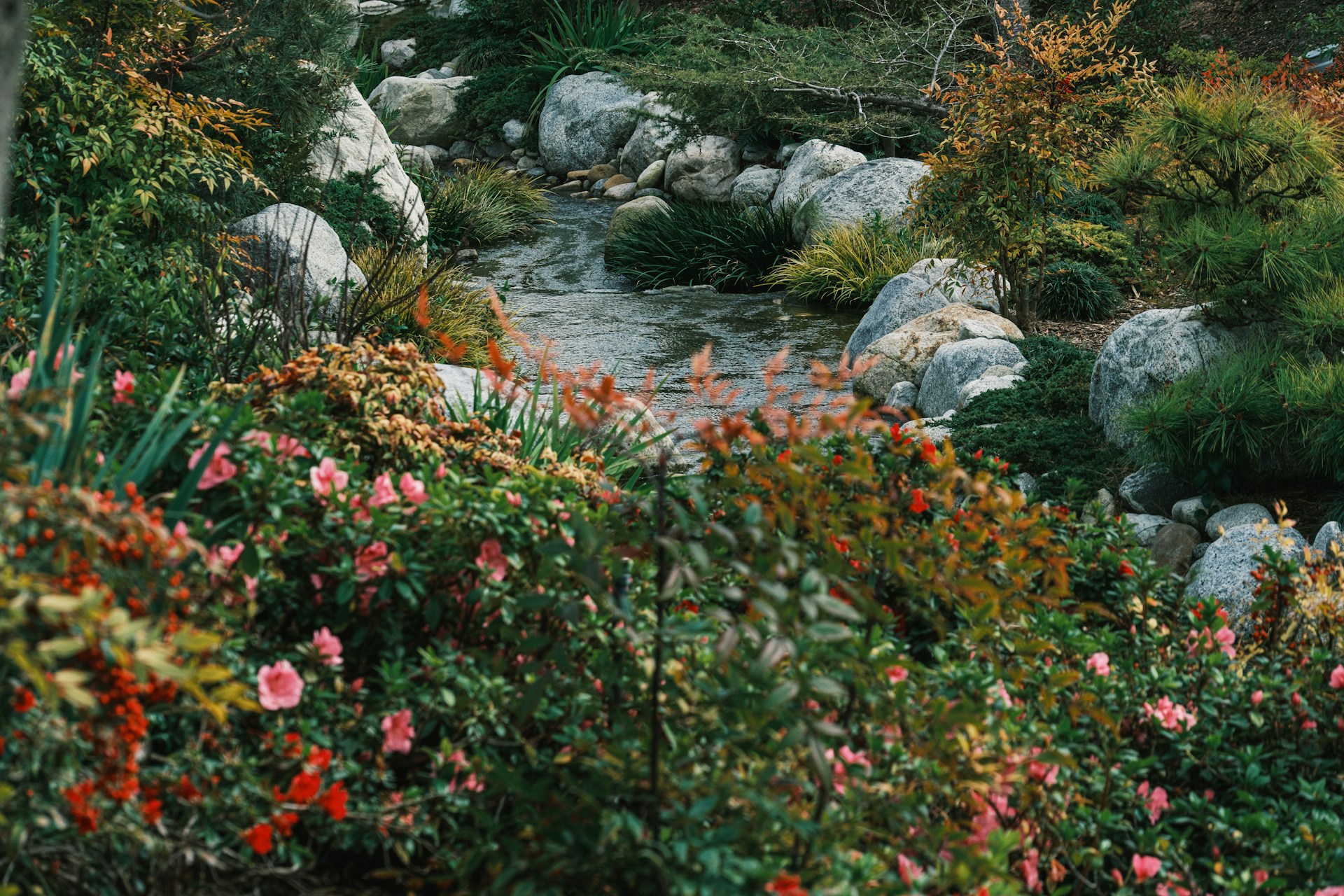
Water features fail in Alberta in three ways: frozen pumps, leaks from freeze-thaw movement, and the homeowner getting tired of the maintenance after year three. All three are avoidable. Most of the avoidance happens at the planning stage, not on install day.
Here’s how we think through a water feature for a Calgary or southern Alberta backyard, and what changes when the climate is part of the design problem.
Pond, waterfall, or fountain
Three categories, three different commitments.
A pond is an ecosystem. It can hold fish (koi, goldfish, native species), supports aquatic planting, and creates real habitat. The reward is significant; so is the maintenance.
A waterfall (with or without a small basin) is the sound and movement of moving water without the ecosystem. Easier to maintain than a pond, less visual presence than a true pond, but a strong sensory addition to the yard.
A fountain or pondless feature uses recirculating water through a hidden reservoir, often with a sculptural element. Lowest maintenance of the three. Good fit for smaller spaces or clients who want the sound without the upkeep.
Most clients ask us for “a small pond with a waterfall.” About half the time, what actually fits their lifestyle better is a pondless waterfall or a larger pond done well. The middle option — small pond — is the one with the trickiest balance.
Pond ecosystems in Alberta
A pond can support koi and goldfish through Alberta winters if it’s deep enough and aerated correctly. Deep enough means about 4 feet minimum, which gets the deepest water below the freezing zone. Aerated correctly means a small bubbler or de-icer keeping a hole in the ice all winter, which lets gases escape so the fish don’t asphyxiate.
Without depth and aeration, fish don’t make it. Don’t try to overwinter koi in a 2-foot pond. Either build deeper, or move the fish indoors for winter.
Plant ecosystems in the pond — water lilies, marginal plants, oxygenators — go dormant in winter. Most hardy varieties survive if they’re below the ice line. Tropicals don’t.
Algae management is the long-term reality of any pond. The easier path is biological balance: enough plants, enough beneficial bacteria, the right fish-to-water ratio. Chemical treatments are a last resort and an ongoing expense.
Waterfalls and pondless features
A waterfall without a true pond is what we recommend most often for clients who want the sound and visual but don’t want to commit to ecosystem maintenance.
The water recirculates from a hidden underground reservoir, up through the falls, back down. From the surface, it looks like a stream or falls disappearing into rocks. Underground, it’s a basin and pump system that can be drained and serviced.
Maintenance is much lighter than a pond. No fish, no significant plant load, no algae management. Winter shutdown is straightforward: drain, clean, store the pump if needed.
Pumps, filters, and freeze protection
Every water feature in Alberta has a pump, and every pump has a winter problem. Either the pump comes out and goes inside (most reliable), or it stays in but at depth, below the ice line, with the lines drained or kept moving. Pumps left in a shallow basin of frozen water are pumps that don’t survive.
Filters need similar attention. Mechanical filters get cleaned out in fall. Biological filters are typically left dormant. UV clarifiers come inside.
The plumbing itself — pond skimmer lines, return lines, waterfall delivery — needs to drain or be blown clear before freeze-up, the same way pool plumbing does.
Maintenance reality
Honest version of the schedule:
Spring: open the system, restart the pump, top up water, plant or reintroduce biological filter media, treat for algae if it bloomed during the warming-up period.
Summer: weekly check on water level, monthly clean of skimmer baskets and filter media, ongoing trimming of aquatic plants.
Fall: net leaves before they sink and decompose, prep for shutdown, treat water if needed.
Winter shutdown: pump out, lines blown, fish provisions made (de-icer running for ponds with fish), basin or skimmer protected.
This is real work. About 10 to 20 hours per year for a pond, less for a pondless feature, more if you have koi.
If those numbers sound like too much, a pondless or fountain feature is probably the better fit.
Where to put it
The instinct is to put the water feature in the centre of the yard. Often that’s wrong. A water feature works best where you’ll actually hear it and see it — adjacent to a deck, near a sitting area, visible from a key window inside the house.
A few practical considerations:
Tree drop. A pond directly under a deciduous tree means leaf load every fall. We can manage it with skimmers, but expect more work.
Sun exposure. Some sun is needed for plants. Too much sun overheats shallow ponds and accelerates algae. Dappled shade is ideal.
Power and water access. Pumps need GFCI-protected power, and ponds need top-up water occasionally. Plan the feature near these or be prepared to run lines.
Sight lines. The feature should be visible from where you spend time, not hidden behind a fence or planting that didn’t exist when the design was drawn.
Designing for winter shutdown
The best Alberta water features are designed knowing they’ll be off for four months a year. That changes a few things.
The feature should still be visually interesting when the water isn’t running. A bare basin filled with rocks and leaves isn’t. A thoughtfully built rock formation with intentional structure is.
Drainage and accessibility. Every part of the system that needs to be opened, drained, or cleared in fall should be reachable without dismantling the surround.
Winter aeration for any pond holding fish. This is non-negotiable.
Where to start
If you’re early in the planning, the right first question isn’t “what should it look like.” It’s “how much maintenance do I actually want to do.” Answer that first, and the type of feature follows. After that, the design work is about fitting it to your specific yard, climate, and how you want to use the space.
Send us photos of the area you’re considering and a rough sense of scope. We’ll come walk it and tell you what the site can support and what kind of feature would actually get used, not just admired from inside.
Leave a Reply