
By The Sculpted Consultant
If you’re shopping for a backyard pool in southern Alberta, you’ll run into three main options pretty fast: precast concrete, fiberglass, and custom-poured concrete. We install precast (Bayto) most often, so we’ll be upfront about that bias. The honest answer is all three can work. The question is which one fits your site, your timeline, and your tolerance for maintenance.
Here’s how we think about it on a site walk.
The climate problem
Calgary winters aren’t the coldest in Canada, but they’re rough on pools for a different reason: chinooks. We get 30-degree temperature swings in 24 hours. That freeze-thaw cycle is what cracks tile, splits coping, and stresses pool shells over the long run.
That’s the lens we use when comparing pool types. Not “what works in a textbook,” but “what holds up after ten years of chinook winters.”
Custom-poured concrete
The pros are real: any shape, any size, any depth. If you have a vision for a freeform pool with a tanning ledge, integrated spa, and vanishing edge, concrete is the only way to get there.
The cons are also real. Long build time. We’re talking 8 to 12 weeks of excavation, rebar, gunite, plaster, tile, and cure time. In Alberta, that often means two seasons because we’re racing weather. Maintenance is more demanding too. Plaster needs replacement every 10 to 15 years, and tile work needs more attention after freeze-thaw cycles.
When we’d recommend it: if the design absolutely requires a custom shape, and the homeowner is committed to the longer-term maintenance.
Fiberglass
Smooth gel-coat surface, less algae attachment, generally lower chemical demand. Faster install than poured concrete.
Shape and size are limited by what can be trucked in on a flatbed. The biggest fiberglass shells top out around 16×40, which is fine for most backyards but won’t get you a 50-foot lap pool. In Alberta specifically, the gel coat can show stress over years of freeze-thaw if the shell wasn’t installed with proper backfill and bracing.
When we’d recommend it: residential-scale pool, gel-coat finish preferred, and the site has good access for a flatbed delivery.
Precast concrete (Bayto)
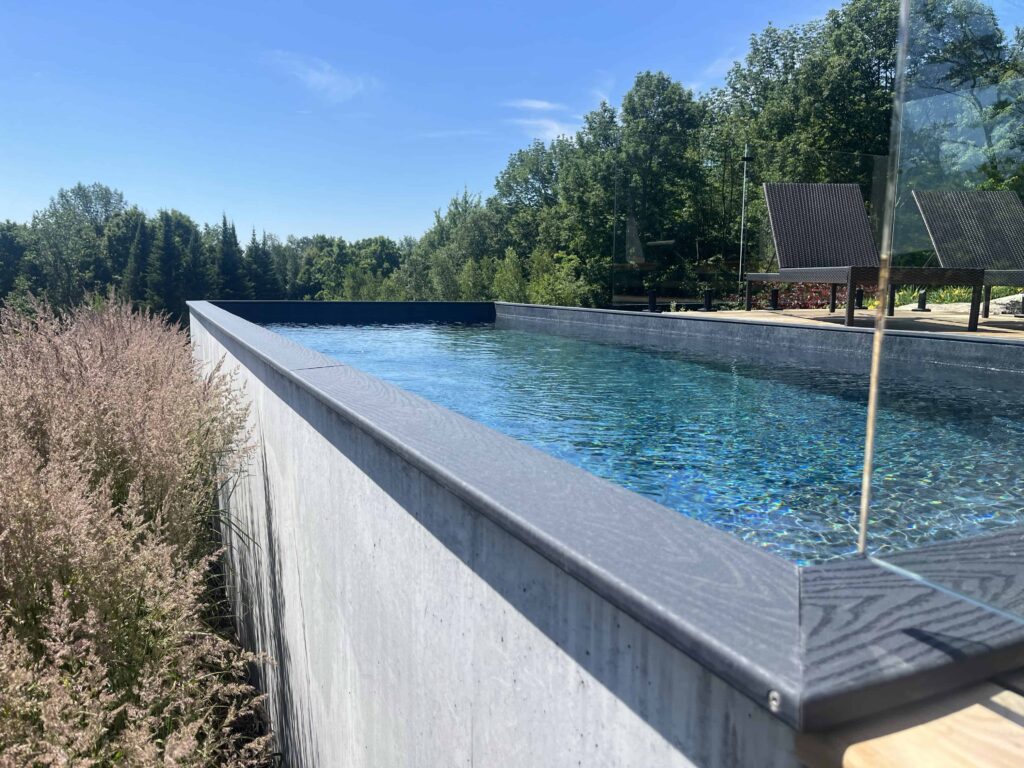
This is what we install most. Bayto shells are factory-cast in Quebec as a monolithic concrete shell, then drop into a prepared site in days. The interior is finished with a 2 mm RENOLIT ALKORPLAN reinforced PVC membrane that’s butt-welded for invisible, watertight seams. Maintenance is closer to fiberglass than to traditional concrete.
The install speed matters more than people realize. We can excavate, set the shell, plumb, and backfill in about a week of weather-permitting work. That’s a real advantage in our short construction season.
The trade-off: sizes are fixed at 8′ × 16′, 8′ × 18′, or 8′ × 20′. If you want a freeform pool or something unusual, this isn’t the option. Crane access also needs to be planned because these shells are heavy and need a clear path in.
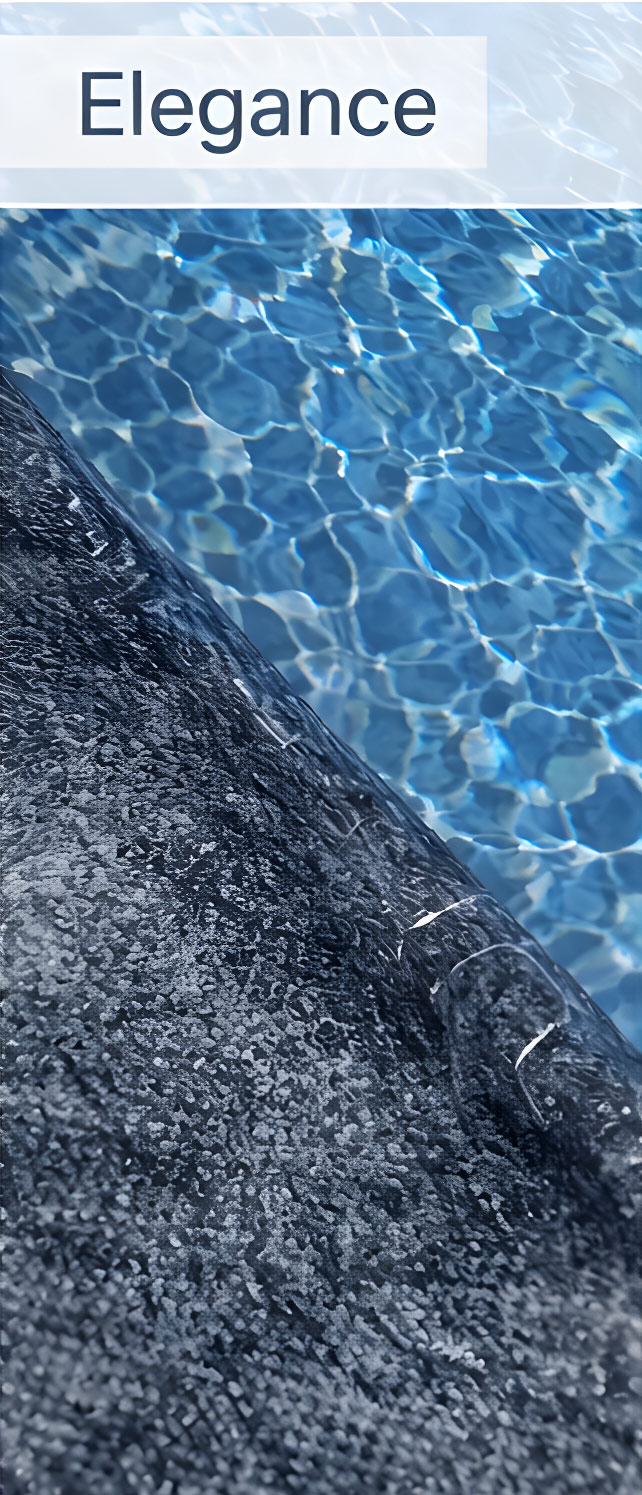
When we’d recommend it: most of the time, honestly. For the typical Calgary or southern Alberta backyard or acreage, precast hits the right balance of cold-climate durability, fast install, and predictable cost. Bayto is a family-owned Quebec manufacturer with over 50 years in the pool industry — exactly the cold-climate pedigree you want for southern Alberta. The interior membrane comes in three finishes (Origin, Elegance, and Prestige) for different aesthetic palettes, and the shell can be installed in-ground, semi-inground, or fully above-ground. That flexibility plus the freeze-thaw engineering is why we became a Bayto authorized dealer.
What actually breaks pools in Alberta
A few things to watch, regardless of pool type.
Frost heave. Our frost depth is around 5 to 7 feet. Footings and pads need to go below it.
Coping and tile failure. The waterline tile is the first thing to crack on poorly built pools. Better materials and proper expansion joints make a real difference.
Equipment freeze. Pumps, filters, heaters, and plumbing all need to be properly winterized. Skipping it once is how you find out it costs more than the closing did.
The pool shell itself is rarely what fails. It’s the surrounding work — coping, deck, drainage, mechanicals — that ages well or doesn’t. That’s where you want to spend on quality.
So which one?
If your site allows it and the size fits, precast is what we’ll usually recommend in Alberta. If you have a specific design that requires a custom shape, custom concrete makes sense. Fiberglass sits in between for most installations.
The fastest way to figure out which works for your site is a walk-around. Send us photos, tell us what you’re imagining, and we’ll give you a straight read.
Leave a Reply