
By The Sculpted Consultant
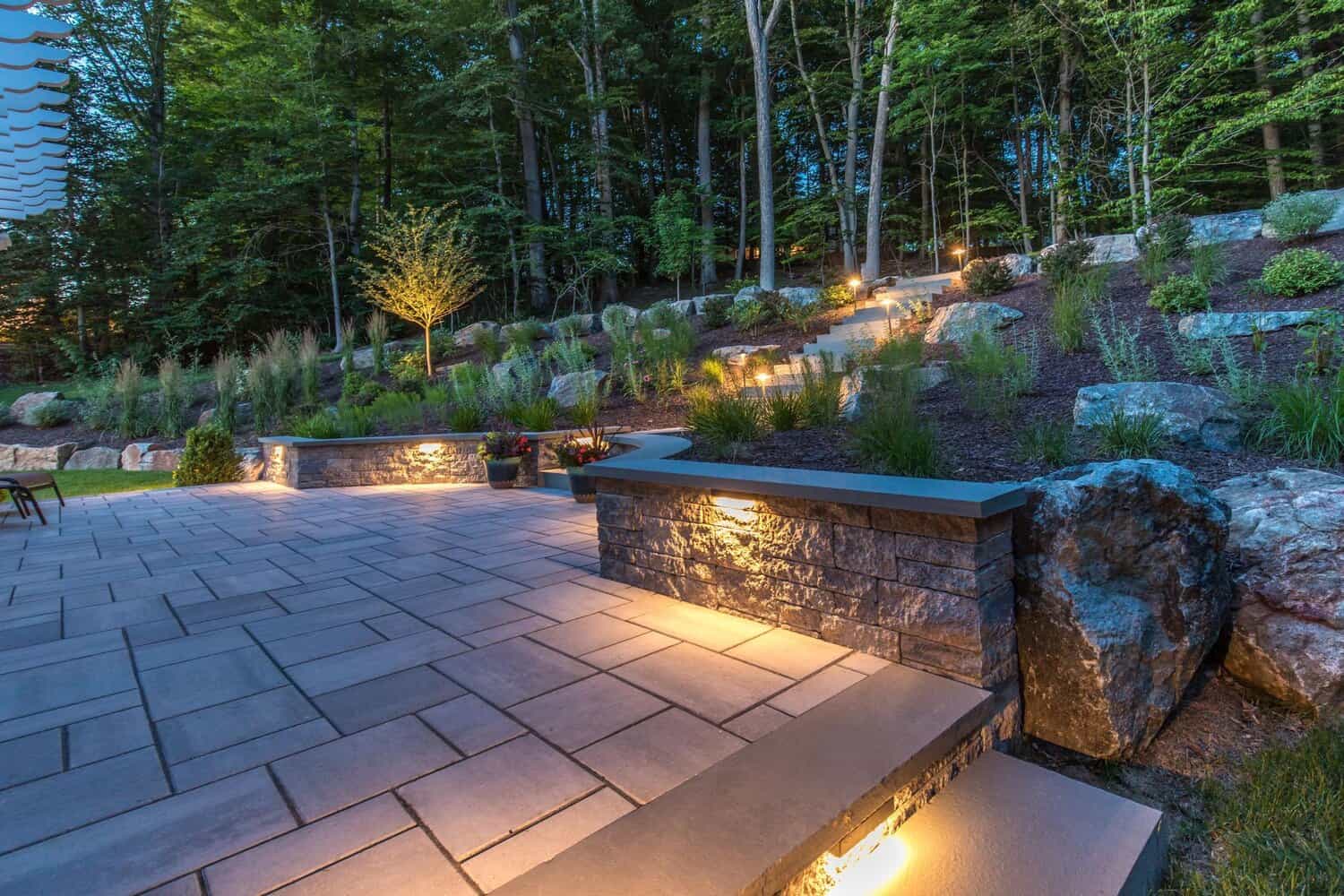
A beautiful Chestermere outdoor space gets used twice and then sits empty. The reason is almost always wind. East Calgary and Chestermere don’t have foothills shelter, the lake adds open exposure, and the prevailing winds cross the area without anything to slow them. An outdoor living space that doesn’t account for this becomes decorative, not functional.
Here’s how we design Chestermere outdoor spaces to actually get used.
Understanding the wind on a Chestermere site
Three things to know before designing.
Direction. Prevailing wind in this area is from the west and southwest. Some sites get more east wind off the lake. Walking the site on a windy day tells you more than any map can.
Strength. Chestermere wind is sustained, not just gusty. A strong day means hours of consistent wind, not a few minutes. Furniture, umbrellas, and lightweight structures all have to handle that load.
Patterns. Wind around buildings and trees creates eddies, accelerations, and dead zones. The wind shadow behind a structure is sometimes calmer than expected, sometimes turbulent. We read the patterns at site walks.
Solid walls vs louvered walls
The natural answer to “block the wind” is a solid wall. That mostly works, but it has a downside: a solid wall creates a turbulent zone immediately behind it. Wind hits the wall, accelerates over it, and drops into a chaotic eddy on the leeward side.
Louvered walls (with vertical slats spaced apart) actually perform better for outdoor comfort. They slow the wind without creating the turbulence. The area behind a louvered wall is calmer and more comfortable than the area behind an equally tall solid wall.
For most Chestermere outdoor living spaces, we recommend a mix: some solid wall sections for visual privacy and partial wind block, some louvered sections for airflow management.
Pergolas designed for wind, not just sun
A pergola’s standard purpose is shade. On a Chestermere property, it can do more if it’s designed for it.
Adjustable louvers. Some pergolas now have motorized louvers that close when wind speeds up, handling both sun and wind.
Side panels. Even partial ones make a pergola a wind shelter, not just an overhead structure.
Anchor strength. Chestermere wind will find any pergola that wasn’t engineered for it. We over-spec anchoring on this side of Calgary.
Material. Lighter pergolas (tubular aluminum, for example) flex more in wind. Heavier built pergolas (timber, structural steel) handle wind better.
Planting as wind management
Strategic planting reduces wind pressure on outdoor spaces.
A row of dense evergreens on the windward side of the patio reduces wind speed on the leeward side meaningfully.
Layered planting works better than a single row. The same three-layer concept that works for acreage shelter belts works at smaller scale for residential properties.
Hardy shrubs and grasses at the patio edge add visual softness while breaking ground-level wind.
The trade-off: planting takes time. A windbreak that will work in five years doesn’t help in the first season. Pergolas, walls, and structures provide immediate shelter; planting provides long-term enhancement.
Patio orientation
Where the patio sits relative to the house and the wind direction matters as much as how it’s built.
Using the house as a windbreak. A patio on the leeward side of the house gets some shelter for free. South or southeast exposure with the house blocking west wind is often the sweet spot.
Sun and wind aren’t always aligned. The east-facing patio might be in the wind. The west-facing patio might be wind-sheltered but bake in afternoon sun. Compromise is usually required.
Lake context. On a lake-side property, the lake view is on the west side, and the prevailing wind is also from the west. That’s an unfortunate combination, and it’s why we end up using more pergolas, walls, and louvered systems on lake-facing patios than we do elsewhere.
Pool decks in the wind
A windy pool deck is a less-used pool deck. On Chestermere properties with pools, we design wind shelter into the surround:
Solid fencing on the prevailing-wind side, often with louvered top sections.
Planted screens of hardy shrubs and grasses.
Pergolas or partial roof structures over part of the deck for sustained shelter.
Pool orientation that aligns the long axis with the prevailing wind reduces surface chop.
Pool covers that are properly anchored. Wind can lift covers off poorly secured pools.
Outdoor kitchens and fire features
Two outdoor amenities especially affected by wind.
Outdoor kitchens. Wind affects gas flames, cooking quality, and diner comfort. We site outdoor kitchens in wind-protected locations and design the surround to maintain that protection.
Fire features. Wind blows smoke, scatters embers, and reduces flame stability. Gas fire features handle wind better than wood. Either way, a wind-sheltered location is part of the design.
Furniture and accessories
Practical advice that designers don’t always cover but should.
Heavy furniture. Wicker doesn’t blow away as fast as you’d think when it’s full-sized and well-built. Lightweight aluminum chairs do. Choose accordingly.
Umbrellas. Cantilever umbrellas with weighted bases work better than centre-pole umbrellas in wind. Even so, close them when leaving the patio.
Cushions and accessories. Anything that can blow away will. Storage benches near the patio are useful.
Talk to us about your Chestermere outdoor space
Send photos that show the property orientation and where wind tends to come from. We’ll come walk it on a windy day if possible — that tells us more than any photograph. Wind-resilient design is one of those things that makes a real difference between an outdoor space that gets used and one that doesn’t.